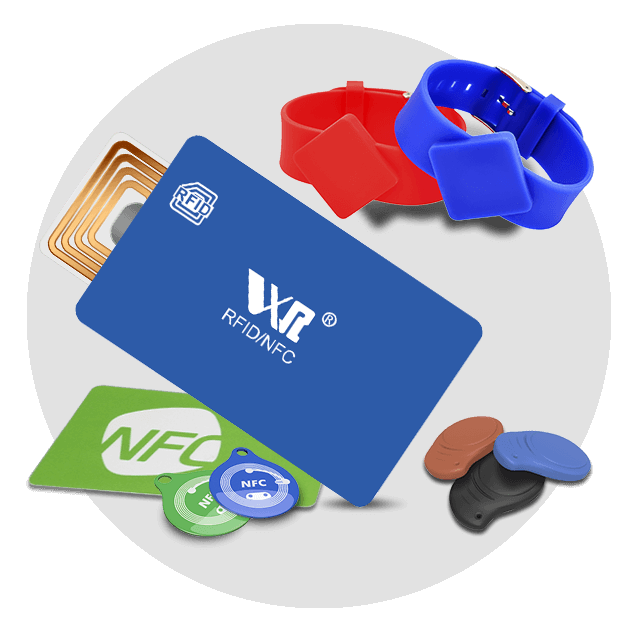
High-value retail is where inventory inaccuracy is most expensive and where security failures are most damaging. A missing piece of jewelry is not a shrinkage statistic; it is a potential theft that may involve law enforcement, insurance claims, and customer trust damage that affects the store's reputation for years. RFID tags designed specifically for jewelry and luxury retail environments address both the accuracy and security challenges that make this category uniquely demanding to manage.
The Jewelry Inventory Challenge
A jewelry store's inventory is characterized by high unit value, small physical size, and large numbers of distinct items that are visually similar to untrained eyes. Distinguishing between twenty variants of a ring style requires precise identification that goes beyond visual inspection alone, particularly in the fast-paced environment of a busy retail floor where multiple customers are being served simultaneously.
Traditional barcode management requires the item to be removed from the display, the barcode located and presented to the scanner at the correct angle, and the scan confirmed before the item is returned to display. In a store with hundreds or thousands of items across multiple display cases, this individual scanning process makes regular inventory counts impractically time-consuming, which means they happen infrequently and inventory inaccuracy accumulates between counts.
RFID enables jewelry retailers to read entire display case contents simultaneously using a flat pad reader placed beneath or inside the case, without removing items from display, without disrupting the customer-facing presentation of the merchandise, and without requiring staff to individually handle each piece. A full display case inventory that would take thirty minutes with barcodes can be completed in under a minute with RFID.
Tag Size and Attachment for Delicate Items
Jewelry RFID tags must be physically small enough not to obscure or damage the items they are attached to, while containing functional chip and antenna components that achieve adequate read performance. Specialty jewelry RFID tags in formats including tiny circular tags, slim label formats, and tags integrated into hang tag assemblies provide options for different jewelry types and attachment methods.
RFID cards and standard form factor tags are generally too large for jewelry attachment, which is why purpose-built jewelry tags represent a specialized product category that requires manufacturing expertise in miniaturization and antenna design at small form factors.
Attachment methods include hang tags with fine thread or wire attachment, adhesive labels applied to the interior of ring shanks or the inside of bangle bracelets, and tamper-evident security tie tags that are difficult to remove without destroying the tag or leaving visible evidence of tampering.
Security Applications in Display Cases
RFID adds a layer of security to jewelry display management by making it immediately apparent when an item is removed from a display case. Smart display case systems using RFID readers embedded in the case interior can generate an alert whenever a tag leaves the read field, allowing staff to be aware of which items have been removed for customer examination and to notice immediately if an item has not been returned within an expected timeframe.
This monitoring capability does not prevent theft but creates immediate awareness that supports faster staff response. Combined with CCTV and other physical security measures, RFID display monitoring contributes to a layered security approach where multiple systems reinforce each other.
RFID wristbands appear in luxury jewelry brand contexts at exclusive events and private viewings, where wristbands control access to invitation-only product presentations and allow brand staff to personalize interactions based on the attendee data linked to each wristband.
Authentication and Anti-Counterfeiting
Luxury jewelry brands face a significant counterfeiting problem. RFID tags embedded within or attached to authentic pieces provide an authentication mechanism that is considerably harder to replicate than a printed certificate or holographic label. A reader confirming the presence and data content of an RFID tag provides a form of product authentication that supports both retail verification and secondary market authenticity confirmation.
For high-value pieces where authentication certificates are part of the product experience, integrating RFID authentication into the certificate itself or into a dedicated authentication hang tag creates a technology-backed authentication chain that supports brand integrity and consumer confidence.
Integration With Jeweler Management Systems
Jewelry management software platforms increasingly support RFID integration as the technology adoption in the sector has grown. Tag reads from display cases, handheld inventory readers, and point-of-sale interactions flow into the management system, updating inventory location data and triggering replenishment alerts when display inventory falls below defined thresholds.
The real-time inventory visibility that RFID provides supports better purchasing decisions, more accurate consignment tracking for multi-location or consignment-based businesses, and faster resolution of discrepancy investigations that would previously require extensive manual searching.
Conclusion
RFID tags have found a compelling fit in jewelry and luxury retail through the combination of inventory accuracy at item level, security monitoring through display case awareness, authentication capability, and integration with modern retail management systems. The physical constraints of jewelry RFID require specialty tag formats and expert manufacturing, but the operational benefits in one of retail's most demanding management environments more than justify the investment in properly specified, purpose-built jewelry RFID tags.